

At some point in every home grow, there comes a moment like this: you stand in front of your plant, look at the leaves, and you know something is “off” — but you have no idea what exactly. The edges curl upward, the tips bend downward, whole leaves turn into little boats. The internet shouts: nitrogen, Cal-Mag, light, watering. And the truth — as usual — is calmer and far more logical. A leaf does not freak out without a reason. It simply reacts.
This article exists for one purpose only: to teach you how to read those reactions instead of changing everything at once in panic.
The leaf as the plant’s language
Before we even get to names like taco or claw, one thing needs to be made clear. Leaf curling is not a disease. It is a defense mechanism. The plant uses it to regulate leaf temperature, water evaporation, and gas exchange. When any of these processes drifts outside the comfort zone, the leaf changes its shape — just like a human instinctively hunches their shoulders when it gets cold.
That is why the first mistake beginners make is asking: “What is it lacking?”
In nine cases out of ten, the right question is: “What in the environment stopped working in its favor?”
“Taco” – the leaf folded like a shell
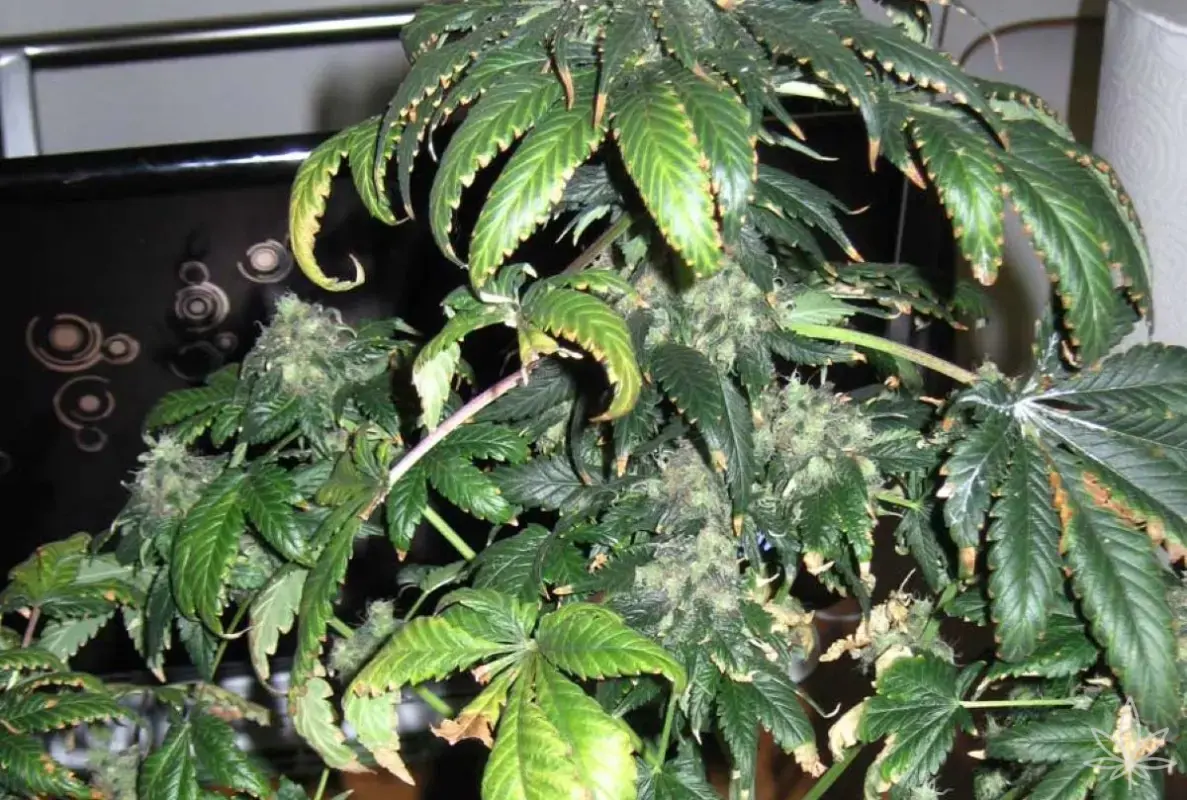
Growers call it “taco” because the leaf looks like a folded tortilla: the edges curl upward while the center remains relatively flat. To a beginner, this looks dramatic and alarming, but in practice it is one of the mildest and most readable stress signals.
Most often, the cause is excessive light intensity combined with conditions that prevent proper water evaporation. In simple terms: the LED lamp is very strong, the leaf heats up, but the air is too humid or too cool for transpiration to keep up. The plant responds by reducing the exposed surface of the leaf, curling it upward.
Many beginners reach for calcium-magnesium supplements or increase feeding at this point, because “the leaf is twisting.” That is almost always a mistake. Taco does not mean hunger. It means the plant cannot process the energy it is receiving.
“Canoe” – the leaf shaped like a boat
Canoe is often confused with taco, but the mechanism is slightly different. Here, the entire leaf bends into a boat-like shape, often becoming soft and limp. This is a classic response to excess heat at the leaf surface.
In home grows, the problem is rarely the average temperature of the tent. Much more often, it is uneven heat distribution. The top of the plant may be several degrees warmer than the lower parts, and without gentle airflow above the canopy, small heat pockets form. The leaf curls to reduce its exposure.
Modern LED lighting plays a tricky role here. LEDs do not heat the air the way older high-pressure sodium lamps did, but they can significantly heat the leaf itself. Without steady air movement across the canopy, canoe appears faster than most beginners expect.
“Claw” – eagle talons
Claw is a completely different story and one of the few cases where nutrients are usually to blame. The leaves curl downward, become thick, dark green, and slightly rubbery to the touch. The plant looks strong, but oddly heavy and sluggish at the same time.
This is a textbook sign of excess nitrogen, the element responsible for vigorous green growth. Unlike taco or canoe, this problem does not start in the air or the light — it starts in the feeding schedule.
That said, overreaction is a common mistake. Claw does not mean you must flush everything immediately. Often, a modest reduction in nitrogen-heavy nutrients and a bit of patience are enough. Panic flushing frequently causes more damage than the nitrogen excess itself.
When leaves reach upward
Sometimes growers say the leaves are “praying” because their tips point upward. For beginners, this can look suspicious, but paradoxically it is one of the best signals a plant can send. It means light, temperature, and humidity are close to ideal, and transpiration is working efficiently.
Still, the line between healthy upward posture and the start of light stress is thin. If the leaves begin to lift and curl at the same time, you have likely pushed things a step too far.
Drooping leaves and the illusion of thirst
Leaves hanging downward without distinct curling are very often misinterpreted as a lack of water. In reality, home grows much more frequently suffer from overwatering, meaning waterlogged soil and oxygen-starved roots.
LED lighting contributes to this trap. Lower ambient temperatures slow down drying times, and beginners water “on schedule” instead of responding to the plant’s actual needs. The result is drooping leaves — even though there is already too much water in the medium.
Why vapor pressure deficit matters more than nutrients
Vapor pressure deficit describes the difference between the moisture inside the leaf and the surrounding air. It sounds technical, but in practice it answers one simple question: can the plant drink and breathe properly? When humidity is too high or temperatures are too low, transpiration slows down. Nutrients remain in the medium, but the plant cannot take them up.
This is why so many issues blamed on calcium, magnesium, or vague “deficiencies” actually start with poor environmental balance. A curling leaf often means “let me breathe,” not “feed me more.”
The beginner’s most dangerous trap
The worst thing you can do is change several variables at once. Increase nutrients, lower the light, water more, add supplements — and then have no idea what helped and what made things worse. Experienced growers always start with the environment and only touch the nutrient bottles at the very end.
Cannabis leaves are not moody or unpredictable. They speak a clear, logical language — you just have to learn how to listen. Taco, canoe, and claw are not secret codes for experts but straightforward warning signs that, when understood, allow you to restore balance quickly. Calm observation and one adjustment at a time will always outperform panic and guesswork.